1 Introduction
Roads are a vital asset for any country, as they play a crucial role in connecting communities, facilitating trade, and providing access to essential services. In South Africa, roads are particularly important, as they are the main means of transporting goods and workers to and from different parts of the country. However, the quality of South Africa’s roads varies widely, with some areas suffering from poor maintenance, potholes, and other issues that can cause damage to vehicles and make travel difficult and dangerous.
Quantifying road quality is important to ensure that the country’s roads are safe and efficient, and that they meet the needs of businesses and residents. By assessing the condition of roads, policymakers and infrastructure managers can identify areas in need of repairs and maintenance, prioritize resources, and track progress over time. Additionally, quantifying road quality can help to inform policy decisions and allocate funds for road maintenance and improvement.
In this project, we propose to use computer vision techniques to automatically assess road quality in South Africa using images from Google Streetview. The output from this project will be a machine vision model that can identify and quantify various road features such as potholes, cracks, and debris, as well as a report that includes the findings from the analysis of the model’s output. This information will be useful for policymakers and infrastructure managers to understand the condition of South Africa’s roads, and to make informed decisions about how to maintain and improve them as an important asset for the nation’s economy, transportation and safety.
1.1 Context
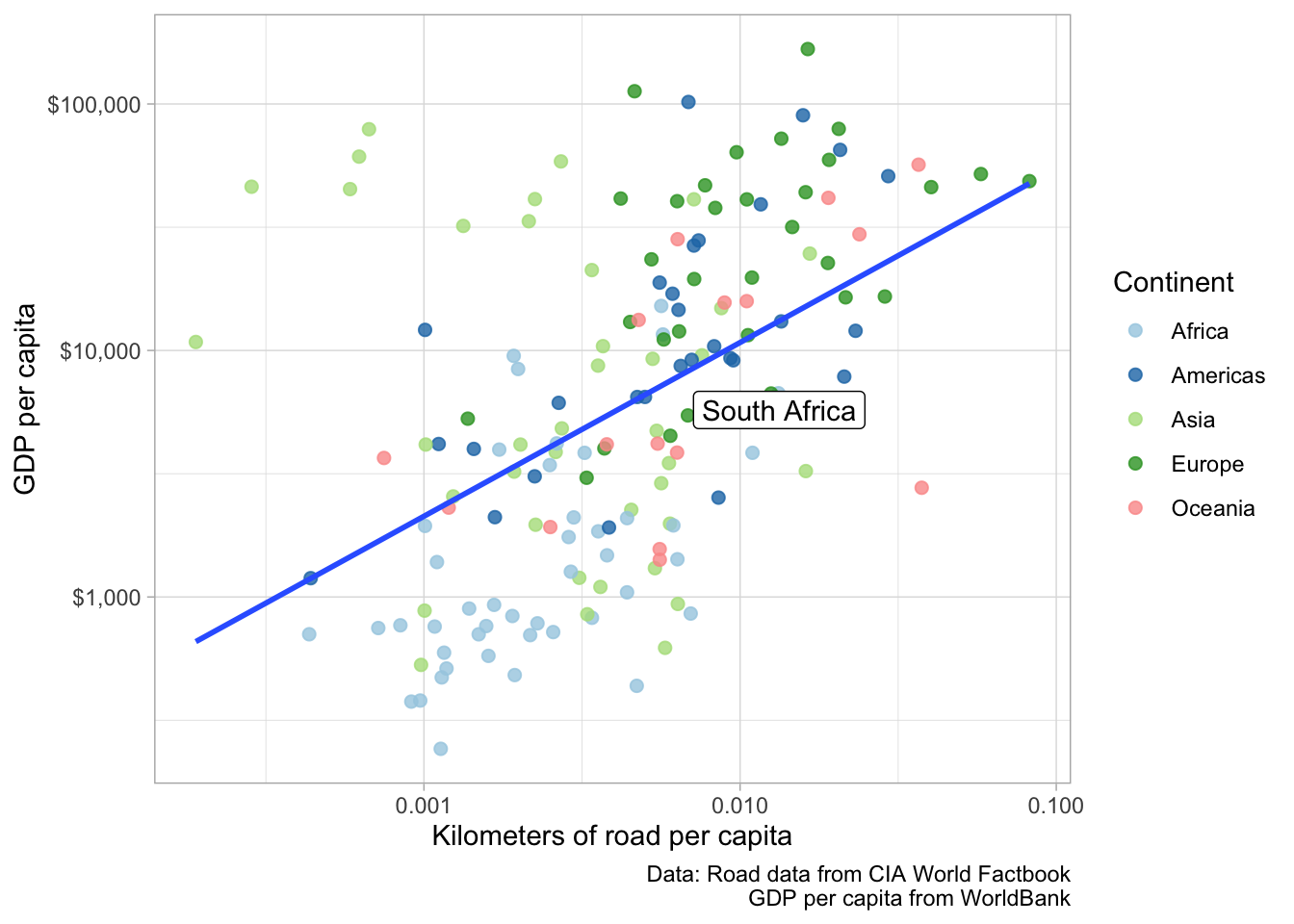
The plot shows a clear relationship between GDP per capita and kilometers of road per capita for 185 countries. The line of best fit indicates that as GDP per capita increases, so does the number of kilometers of road per capita. However, there are several countries that fall below this line, including South Africa. Despite leading Africa in GDP per capita, South Africa has a relatively low level of GDP per capita for it’s road infrastructure (lying below the line of best fit). This suggests that, while the country’s economy is growing, the quality of its infrastructure is not keeping pace. The data implies that there may be a need to invest more in road infrastructure in South Africa in order to support economic growth and improve the standard of living for its citizens.
It is important to note that the plot only shows the relationship between GDP per capita and kilometers of road per capita. While it gives an idea of the infrastructure available in each country, it doesn’t convey information about the quality of the road surface. The quality of the road surface is a key factor in determining the safety and efficiency of a country’s road network. Poor road surfaces can cause damage to vehicles, increase the risk of accidents, and make travel more difficult.
Roads with good quality surfaces are smoother and safer to drive on, and they have less wear and tear on vehicles, which in turn reduces maintenance costs. Additionally, good quality roads can help to improve the efficiency of transport, making it easier and faster for goods and people to move around the country. This can lead to economic benefits, as it can make it easier for businesses to operate and for people to access jobs, education, and healthcare.
Therefore, assessing the quality of the road surface is an important factor that should be considered when evaluating the overall condition of a country’s road network. In addition to the number of kilometers of road, it is important to consider the quality of the roads and their impact on the economy, transportation, and safety.
1.2 Roads in South Africa
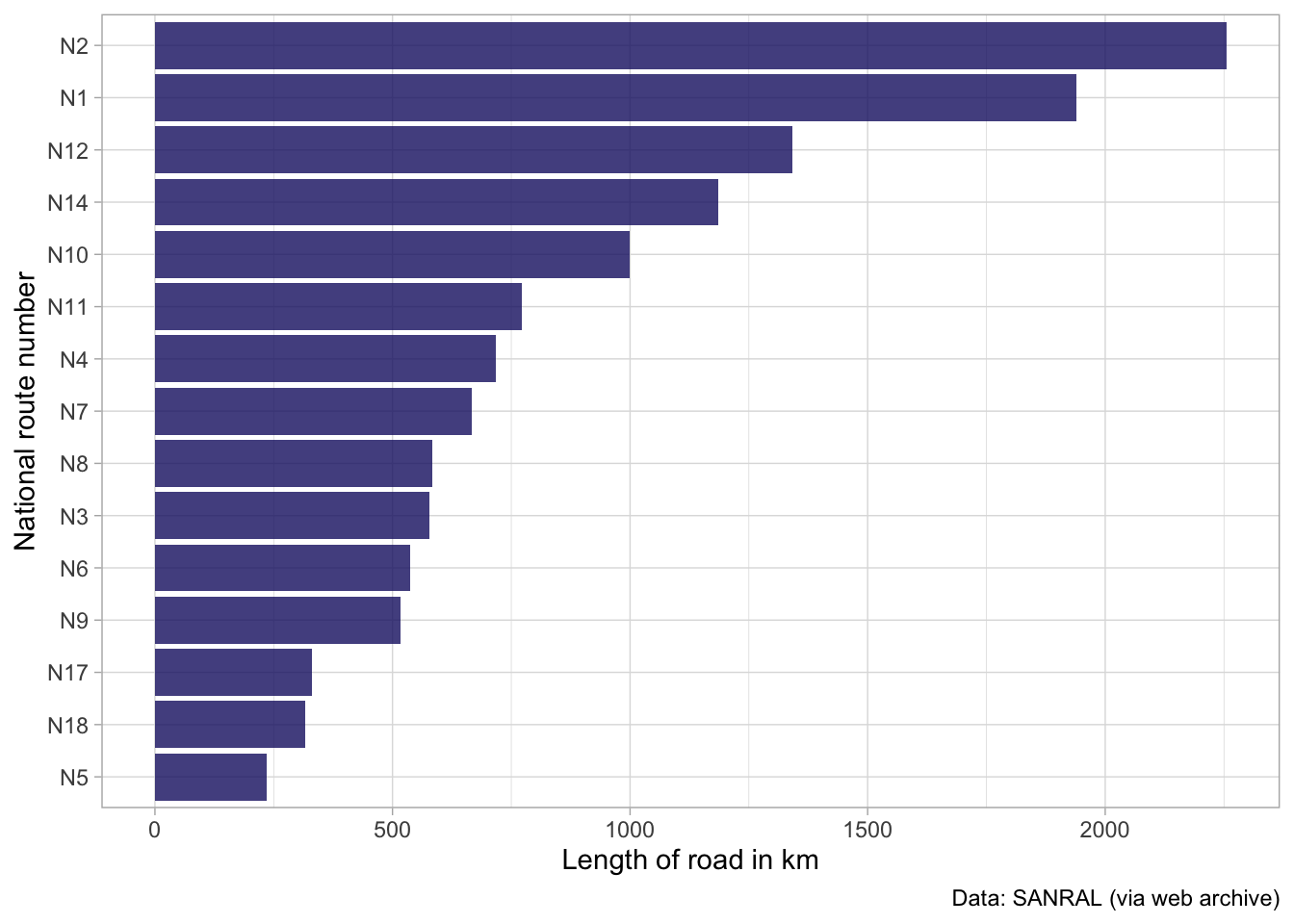
South Africa has extensive national routes that span the country, as shown in the plot below.